


Emerging Security Standards for Crypto Wallets


Over the past few years, there has been a growing preference among cryptocurrency traders and investors to use non-custodial wallets for storing their digital assets. However, the non-custodial wallet comes with its risks, as it is a target of hackers and security breaches. This makes it imperative to understand the emerging security standards in cryptocurrency wallets, as wallet security is paramount in protecting your cryptocurrency assets.
This article covers crypto wallet security, addressing common risks, types of attacks, historical breaches, and user protection methods. It also introduces the CoinEx wallet as an example of advanced security standards. Additionally, it discusses emerging security measures and provides a future outlook on non-custodial wallets.
Crypto Wallet Security
A crypto wallet is a digital application that securely stores and manages your cryptocurrencies. It is a virtual wallet for your digital assets, allowing you to send, receive, and manage your cryptocurrencies. A crypto wallet stores users' public and private keys, enabling them to receive cryptocurrency with their public keys and sign transactions with their private keys.
The security of cryptocurrency wallets is crucial for digital asset safety. Cryptocurrency transactions are irreversible, and if your private keys are compromised, your crypto assets can be stolen without recourse. Therefore, it is important to prioritize the security of your crypto wallet.
Overview of Current Security Challenges
In this section, we will discuss the potential risks and security challenges commonly encountered with crypto wallets, common types of attacks to which cryptocurrency wallets are susceptible, and historical wallet security breaches, along with how to mitigate them.
Potential Risks Associated with Crypto Wallets
While cryptocurrency wallets offer a secure way to manage cryptocurrency assets, they are not without potential risks. One major concern is the loss or theft of private keys, which are crucial for accessing and authorizing transactions. If private keys are lost or stolen, the associated cryptocurrencies become inaccessible and vulnerable to unauthorized access.
Additionally, some wallets may be susceptible to hacking attempts, malware attacks, or phishing scams, potentially compromising the security of cryptocurrencies. Another commonly faced challenge is user error, such as sending cryptocurrencies to an incorrect address. Sending your cryptocurrencies to the wrong address or via the wrong network can result in irreversible losses. It is important to double-check the address you are sending to due to clipboard malware and also ensure you are sending via the correct blockchain network.
Types of Crypto Wallet Attacks
As the popularity of cryptocurrencies continues to rise so does the incentive for malicious actors to target wallet users. Here are five types of crypto wallet attacks that users should be aware of:
- Phishing Attacks: Phishing attacks involve tricking users into revealing their private keys or seed phrases through fake websites, emails, or messages disguised as legitimate sources.
- Malware Attacks: Malicious software, such as keyloggers or trojans, can be designed to steal private keys or seed phrases from infected devices.
- Man-in-the-Middle (MITM) Attacks: In an MITM attack, the attacker intercepts the communication between the user's wallet and the blockchain network, potentially allowing them to modify or steal transactions.
- Brute Force Attacks: Attackers may attempt to guess weak or simple private keys or seed phrases through automated brute force methods.
- Insider Attacks: In some cases, employees or individuals with privileged access to a wallet's private key may attempt to exploit their position to steal or misuse user funds.
Users must exercise caution, follow security best practices, and remain vigilant against potential threats to safeguard their cryptocurrency holdings.
Historical Wallet Security Breaches
Historical wallet security breaches in the cryptocurrency space have highlighted various vulnerabilities and risks that users face. In 2022, incidents such as mishandling private keys, susceptibility to trojan apps, and compromise of iCloud backups underscored the importance of robust security measures. These breaches often stemmed from issues such as improper handling of sensitive data, insecure storage practices, and vulnerabilities in the wallet infrastructure.
In response, users can mitigate such risks by carefully selecting reputable wallets with a strong security track record, downloading wallet applications and extensions only from official sources, keeping devices updated, using dedicated devices for wallet activities, and considering hardware wallets for added security layers. Users should remain vigilant against emerging threats, such as the distribution of malicious wallet versions. Implementing additional security checks, such as verifying website authenticity before interacting with wallets, and using verified antiphishing extensions to double-check wallet requests and permissions on websites.
Emerging Security Standards for Crypto Wallets
The cryptocurrency industry has witnessed several high-profile hacks and security breaches, leading to significant losses for users and platforms. These incidents have highlighted the need for robust security measures and prompted the development of emerging security standards for crypto wallets. CoinEx wallet is an example of a wallet that follows these new standards.
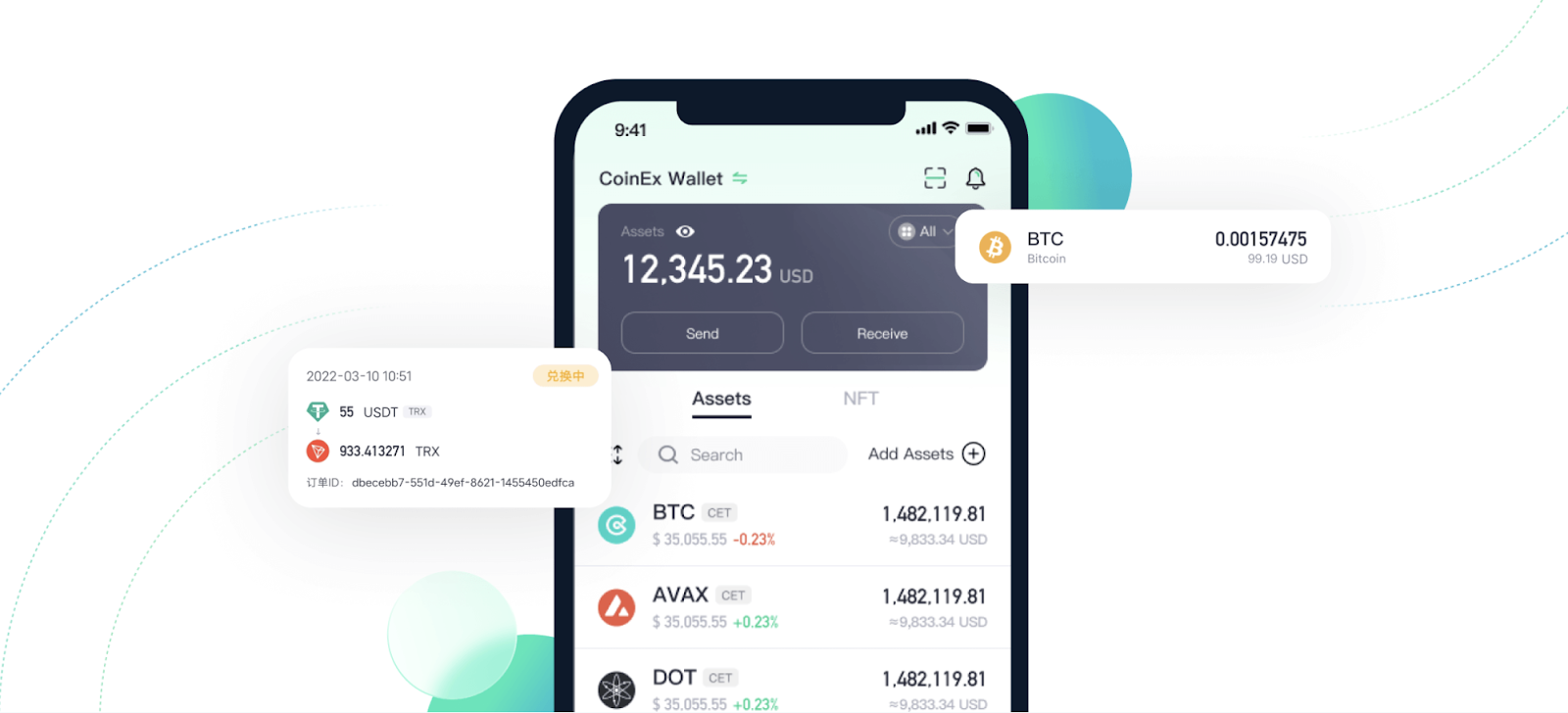
The CoinEx wallet is a highly secure, 100% non-custodial, and multi-chain powerful Web3 wallet that offers a range of features for managing digital assets. It allows users to store multi-chain assets in one wallet, providing advanced features such as Transaction Accelerator and Address Converter. The CoinEx wallet offers a cross-chain swap feature, enabling fast and seamless crypto swaps through aggregated platforms, compatible with multiple chains, and executing instantly without pending orders. Asset security is paramount in the CoinEx wallet with diverse innovative security features.
As the crypto industry continues to evolve, emerging security standards for crypto wallets are becoming increasingly important. These standards include multi-signature wallets, hardware security modules, biometric authentication, quantum-resistant cryptography, zero-knowledge proofs, secure enclaves and trusted execution environments, decentralized identity and self-sovereign identity, blockchain-based authentication, AI-powered threat detection, and biometric multi-sig (multi-signature). These measures aim to enhance the security and privacy of crypto transactions, safeguarding users' assets and personal information from potential threats and vulnerabilities.
Future Outlook
The future of cryptocurrency wallets looks bright, with ongoing web3 security improvements. As crypto adoption increases, expect tighter security measures like advanced biometrics and quantum-resistant cryptography. Emerging technologies like AI and machine learning could also boost threat detection. Hardware solutions like trusted execution environments offer extra protection. Users and industry leaders need to stay informed and adaptable to evolving cyber threats. Keeping up with security standards and best practices is key to safeguarding the cryptocurrency ecosystem.
